
SUBSCRIBE TO PODCAST



SUBSCRIBE TO PODCAST
FEATURING:
Mary Obregon
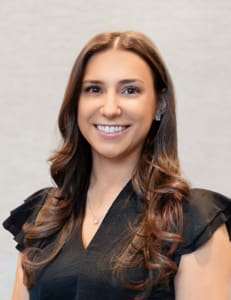
Mary joined Edge Marketing in 2020 and has quickly established herself as an expert in translating complex regulated-industry brand positions into social media content that earns genuine engagement. She leads Edge’s social media and brand strategy practice for clients across legal technology, accounting, and professional services.
Mary’s talent for making sophisticated B2B positioning accessible and engaging on LinkedIn and other platforms has made her a key contributor to client programs that require both strategic depth and platform-native execution.
Jennifer Marsnik
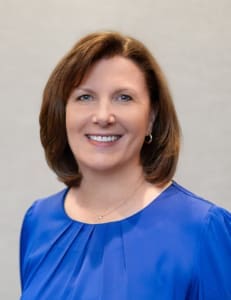
Jennifer has been part of the Edge Marketing team since 2007. She brings deep knowledge of regulated-industry communications, critical strategic thinking, and nearly two decades of client relationship experience to every engagement.
Jennifer is known for developing and implementing strategic communications and marketing plans that align precisely with each client’s broader business objectives, not just their marketing goals. Her work spans PR strategy, messaging architecture, content development, and integrated campaign planning for legal technology and professional services clients.
Before joining Edge, Jennifer worked with Amy Juers at LegalVoice and gained legal industry experience at Merrill Corporation, followed by a decade in financial services supporting credit unions and banks.
EPISODE SUMMARY:
In this Edge Unscripted episode, host Mary Obregon and B2B strategist Jennifer Marsnik unpack “the invisible first meeting” and what it means for legal, accounting, compliance, and technology providers. They explore how answer engine optimization, generative engine optimization, and multi-channel content change where your next client’s research really starts and how trust is built long before a sales conversation. You will walk away with practical ways to repurpose what you already have and a realistic three step plan to expand your digital footprint without multiplying your workload. To read Jennifer’s full article “The Invisible First Meeting:” click here >
TRANSCRIPT / TIMESTAMPS:
[00:00:17] Mary Obregon: Welcome back to Edge Unscripted. I’m your host, Mary O’Brigan, and today we’re getting into something that I think is gonna hit close to home for a lot of our listeners, especially if you work in legal, accounting, compliance, or technology. My guest today is my colleague Jennifer Marsnik, a B2B marketing strategist who works with professional services firms on content strategy, thought leadership, and answer engine optimization, also known as AEO.
Jennifer recently published a piece called The Invisible First Meeting, and it’s one of those articles that makes you stop and rethink something that you thought you already understood. So Jennifer, welcome to Edge Unscripted. I’m so glad you’re here.
[00:01:02] Jennifer Marsnik: Thanks, Mary. Happy to be here with you again. It’s been a little while.
[00:01:06] MO: Yes, it has. How are you doing today?
[00:01:10] Jennifer Marsnik: I am good. It is a sunny day in the Twin Cities, a nice spring day, although I can see some pollen starting to come off the trees that finally have leaves on them, so. How about you? How are you doing?
[00:01:23] MO: Good. Yeah. Um, yeah, it’s definitely been nice over here in New York, but, uh, we are definitely feeling the allergies this season so far.
I have … myself have been sneezing a lot, so just had to take a little Benadryl. I hope I, I hope I can make it through the episode. I’m just kidding.
[00:01:43] JM: Stay awake. I’ll, I’ll shout you awake if you look like you’re drowsy for a few
[00:01:48] MO: Yeah.
[00:01:48] JM: Yes, I know it’s been … It’s … I think it’s gonna be one of those springs, so hopefully it won’t be, hopefully it won’t be too bad for us.
[00:01:57] MO: Yeah. So I do think we have an interesting topic today, though, so that should hopefully keep me- … focused and listening. So let’s talk about your article, s- which it opens- Yeah … with a pretty bold observation that your potential clients already know a lot about you before they even reach out. So can you walk us through what you mean by invisible first meeting in the title?
[00:02:20] JM: Absolutely. So I think of the invisible first meeting as sort of the, the research phase that’s happening before your new prospects are reaching out. So I think that buyers and influencers in professional services especially, they spend real time vetting the vendors and service providers they might be considering not waiting for your sales team to walk them through a presentation, a slide deck, or have a conversation with them.
There’s some research that estimates that b- B2B buyers might complete more than half of their decision-making process before they ever even speak with a sales rep. Which I think is interesting because so much in this realm that we work in is focused on direct sales. But that really has also direct implications for how and where firms and companies might show up and be accessible to their target audiences.
So if you think of it, somebody like a general counsel who’s evaluating outside counsel, or a CFO looking at advisory firms, or any- anyone in a law firm that might be considering a service provider for something, they could be searching any number of places. They might start on LinkedIn and continue with listening to a podcast or maybe do a YouTube search, and increasingly that includes a query on an AI platform like Claude or ChatGPT.
So today, your company’s website may not even be the first place they land to learn anything about you. And I really think a big shift is that you no longer can rely on an initial conversation to do that beginning kind of credibility building that you have to do. The trust has to be established in some ways before the very first hello.
And I think of it also like, you know, in a related way, not even marketing related, this happens just all over. If you’re searching- Mm-hmm … for restaurants to go to, your first experience with them might not be when you’re, when you’re physically there. You’re reading reviews on on Google or OpenTable or somewhere.
Or if you think about how s- people research somebody before a job interview. Mm-hmm. If you’re a hiring manager, you might Google them and check their LinkedIn- Yeah … and look up some of their work. So your potential clients are doing the same thing. The invisible first meeting is essentially the internet age version of doing your homework before you walk in the door, and that you really just have to ask yourself, what are they finding when they do that homework on me?
[00:04:58] MO: Yeah. And even now, if you do a quick Google, it does usually pull up an AI answer too, which is very interesting too. So it all kind of ties back to, again, it may not be your website as the first thing that they’re seeing when they look you up. Right. Um, so it really reframes the idea of a first impression.
Um, if the invisible meeting is already happening, let’s maybe talk about some of the implications for how firms can position themselves online. You refer to a concept in the article, AEO, or Answer Engine Optimization, distinguish it from SEO and GEO. So for listeners who may not spend a lot of time in the marketing weeds, I guess you could say, can you- Like me
break those can you break those down for us a bit?
[00:05:48] JM: Absolutely. It’s, you know, it’s interesting because there’s sort of been this explosion of this in the last couple of years with, the, as AI has exploded in its use. So I think it is a little confusing because marketers in particular, or especially if you’re just dabbling, you might see different acronyms for things, and you may or may not really distinguish among them.
And I think the tricky place we’re in right now, Mary, is that there’s a lack of consistency in the discipline of marketing in general around the definition of all of these. I think if we start with search engine optimization, that’s the one most people have heard of. It’s the traditional powerhouse that focuses on optimizing website rank in traditional search engine results pages.
So if you think about Google or Bing, right? The way we used to just do searches and look things up. And that hasn’t- Mm-hmm … that hasn’t really changed. It’s still really relevant, and I think that’s the one that most people are most familiar with. The whole goal of search engine optimization or SEO is to drive organic traffic to your website using things like keywords and backlinks increasing your site speed and your mobile responsiveness.
All of those things kind of have traditionally played into how you’ll rank in the search results. All of that is still relevant and you absolutely have to continue doing it, but there’s some additional things too. AEO is today, uh, answer engine optimization. Kind of goes one layer deeper. I think of it as a subset of SEO that focuses on direct answers, so like Google has f- featured snippets or even think of voice assistants, Alexa or Siri.
A lot of people use- Mm-hmm … those for everything, right? It’s specifically about whether your content is being selected as the answer that’s provided. And- Mm-hmm … y- you know, you want to provide the single definitive answer to a specific question, and the way you go about that is by making sure that you have content attached to your brand that is what we call structured data that has schema markup attached to it that’s gonna make those answer engines find you.
That might include things- Mm … like FAQ sections or just other concise kind of what we call snackable content that makes it really easy for people to find a very specific answer to a question. And then the newest layer is GEO, generative engine optimization, and that one is getting a lot of attention now too because this is where your content becomes part of what an AI platform uses to construct their synthesized response, right?
They’re… The generative AI platforms are out there. If you’re asking Gemini or ChatGPT- Or one of the other tools out there a question, they’re not just finding this information, they’re making a judgment about it. So in your area of expertise, they’re gonna, they’re gonna determine if your firm’s thinking part about what, like how is the answer being shaped based on what it can find about you.
So it’s producing an answer, like answer engine optimization, but it’s really this, the whole piece of it with the generative AI platforms and the way they go about finding the information. It’s so much has to do with credibility and trust. It’s not just having data points out there. It’s what judgment are they making about it.
And so the common thread that is between these two newer optimization things, GEO and AEO, is the rise of the zero click search. And you and I- Mm-hmm … we, our team talks about this all the time. This happens when any search engine you use, a traditional one or a generative platform, provides the answer directly on a results page, leaving the user with no reason to ever click through to any website, yours or somebody else’s.
So- Mm … there’s challenges around this because there’s traffic loss. Traditional SEO is suffering because it used to just provide a website and a tiny little piece of information, and people would click through that. Now they’re getting all their information in that search result. They don’t always have a reason to go to the site.
So that’s, again, part of this invisible visit that they’re having where they’re learning something about you, but you lose a lot of control over what they’re finding. You might be providing the value, but you aren’t always getting the session data or ad revenue or whatever that might be attached to it as well if you’re investing- Mm-hmm
in some of those things. So I think a piece that’s really important to understand is that these are not competing strategies. SEO and AEO and GEO, they’re really complimentary layers to one another. And for professional services organizations, companies selling to them, it the important thing is to understand that the credibility signals across all of them are gonna affect how and whether you show up in those answers that they’re producing.
[00:10:59] MO: Yeah. So these are three truly distinct opportunities for visibility as long as you utilize them correctly, but they do require content that is actually out there in these places, correct? In the right places.
[00:11:14] JM: Exactly. And I think that’s where multi-channel becomes essential because search and AI platforms are surfacing results, not, obviously not just from your website, like we talked about.
They’re searching results from YouTube and from LinkedIn and podcasts and-
[00:11:29] MO: Yeah …
[00:11:29] JM: so treating those platforms with the same- I would say, like, intentionality that you bring to your website SEO will significantly expand your reach. I think a practical example is even, like, a podcast, what we’re doing right now.
A podcast transcript paired with show notes is increasingly indexed by AI platforms, right? Like, this is something that wasn’t even a thing 10 years ago, but that’s why what we’re doing now is actually a discoverability strategy and not just an audio experience.
[00:12:01] MO: Mm-hmm.
[00:12:01] JM: So I think I was talking to somebody recently and, um, sort of used a, a metaphor of an iceberg.
We said you’re … You think of an iceberg, only the tip of it is showing out of the water, right? Mm-hmm. Your website is the tip of the iceberg, and what’s below the surface, that’s your LinkedIn content and your podcast appearian- appearances or any bylined articles that you have published, a video clips that you’re producing and posting somewhere.
That’s actually a much larger surface area cumulatively. It’s not all viewable at the top, but in today’s search engine, in today’s search environment, I would say, the iceberg below the waterline is where so much of that discoverability is happening. If you’re only investing in the tip, you’re invisible to a big portion of your potential audience.
[00:12:53] MO: Yeah. That is a really great metaphor. I mean, it also raises a real question for the professionals who are already stretched pretty thin. It’s kind of difficult to make sure that you’re focusing on all of these. So what channels actually move the needle for them? Your article makes the case that authority cannot be built on only one channel anymore.
So what does a realistic multi-channel presence look like for firms or companies who may not have a big marketing team to cover everything that’s under the waterline?
[00:13:29] JM: Well, I think to start, it’s important to note that multi-channel doesn’t mean being everywhere all at once. Mm-hmm. Um, it means being strategic about where your buyers actually spend their time and attention.
So, I mean, we throw out a lot of different platforms and channels that you might be using, but you really have to assess who your audience is and where they’re going to be spending their time, and hone in on those. I think for most professional services audience, the tier-one channels are probably are LinkedIn and industry-specific s- media outlets and podcasts and maybe YouTube.
I think a thoughtfully written and properly tagged LinkedIn article does a lot of credibility work. A guest spot on a podcast creates audio content that gets indexed. A short video clip from a conference panel if, you know, or, or maybe a webinar that you’ve participated in, those can live, live- Mm-hmm
on YouTube. And do search work for months for you as they sit out there. Um, another thing that, that gets overlooked sometimes, and it’s still so relevant today like it is for traditional SEO, but backlinks. When you h- when you author a bylined article and it gets cited in an industry publication, it gets published there, it’s, gets referenced in a blog somewhere, that’s not just nice for your ego, right?
Like, it feels good. Oh, so-and-so paid attention to me. That’s great. But it’s a meaningful signal to the search engines. Mm-hmm. It’s one of the strongest ranking signals that exists. This has always been the case with SEO, having, you know, your work cited somewhere else. It’s really hard to replicate that through website optimization alone, though.
So focusing on those activities re- remains really valuable, I think. And the good news is that none of this requires starting from scratch, because, oh my gosh, Mary, how often do we talk about repurposing content that you do, right? Mm-hmm. But a single webinar or a panel appearance can become a LinkedIn post or a short video clip and a podcast segment and a blog summary.
And when all of those are indexed separately, it expands your footprint without multiplying your workload. So again build it once and then chop it up, figure out how you can move it into a lot of different channels and platforms.
[00:15:53] MO: Yeah. So you’re really talking about content repurposing as a discoverability strategy, not just for efficiency of utilizing everything that you have.
[00:16:03] JM: Yeah. That’s exactly right. I mean, we used to talk about it more from the idea of efficiency, like we don’t have to put as much work into coming up with new topics or new
If you find something that your audience is really interested in, maybe you publish a an e-book or a white paper and it gets really good traction. Well, it, from an efficiency standpoint, using it in a lot of different ways always made a lot of sense. Today, it’s really using that long form content that you create as a s- and use it as a source file.
Figure out what you can make from it, not just to, for the purpose of being efficient, but really to make sure you’re discoverable on all these different platforms. And I think that overall mindset change can change how you plan content from the start. So if you’re mapping out a content calendar and you’re gonna identify a topic that’s relevant and what you do with it afterwards, it’s not just about repurposing it to save yourself some time and work.
It’s being m- much more strategic with it. Um- You know, I think about one of the, one of the things we hear sometimes from sometimes our clients, other folks we talk to just in this business where they’ll say, “Oh, our clients aren’t really on LinkedIn a lot,” or maybe you just don’t know that they’re on LinkedIn.
But in some cases, that might be partly true. You know, a C-suite decision-maker may not spend a lot of time on LinkedIn, but the associate GC who’s vetting your firm, she is, right? And the compliance analyst who’s building a shortlist, he’s searching various places to see what he can find about the different organizations they’re considering shortlisting.
The research phase is more distributed, I think, than most companies realize it is, and the person doing the vetting isn’t always the final decision-maker. So that’s the other thing, like, making sure that you have … that you’re findable to different audiences within an organization. You might be selling to a law firm, but there might be three or four different people in that firm vetting you, and they’re all gonna bring their own unique perspectives in how they’re doing that.
Mm-hmm. So again, expanding that that whole … the bottom, the underwater part of the iceberg, just to make sure they can find, they can find you is really important.
[00:18:26] MO: Yeah. It’s true. There’s so many people at companies that are searching, no matter who the decision-maker is. There’s also influential people in the organizations doing the searching.
So maybe let’s zoom in on one format in particular, ’cause I know you have some ideas to share about video. What makes video such a powerful tool for this kind of visibility work, and what types of videos do you think work well for B2B marketing that maybe address this hesitation that some people have about being on camera?
[00:19:00] JM: Yeah. Um, I think video today really continues to earn its place in a c- content strategy for a few reasons. It … This has always been true, and it remains true. It increases dwell time. So wherever they’re seeing that video, if you can hook somebody in and they’re watching a video for any period of time, they’re staying on your site a little bit longer, which is always a po- again, a positive signal.
It’s what is the underlying signal that answer engine or the search engine or the GenAI platform, what are they interpreting about what’s going on here? And if you can get somebody hooked in watching a video for 60 seconds or 90 seconds, they’re d- staying on that page a lot longer, and that’s going to be a really positive signal to the engines that are- Assessing who you are and what you have to offer.
It generates transcripts that can become key- keyword-rich text. We always talk about that, you know, being able to even going back to SEO, using keywords, and it attracts backlinks and embeds it in a way that written content often does not. So video has the … It can be really powerful because instead of just a written piece of content, it’s got multiple features to it that can be so much more powerful.
And I think for professional services where trust is such … In some ways, it’s the whole game, right? Video does something really unique in that it can let a buyer hear how you think before they ever book a call, and that can be a really big advantage. I think there’s also an element of it allows you to inject a little bit more personality in what they’re seeing from you, even if it’s in something like a product demo, right?
So- Mm-hmm … there’s so many aspects of it like that. As far as, you know, types of videos that tend to perform well, thought leadership videos. A lot of people in our business don’t spend much time making these. They write content pieces but they don’t produce a lot of videos, and I think that it’s an opportunity that might be being missed for a lot of companies.
But trends to watch and ask-the-expert style pieces, they can really do a lot to establish credibility and generate search traffic. FAQs and, and myth-busting videos are particularly strong for voice search. Um, and how-to and explainer videos are excellent at the top of the funnel, educating a buyer who’s in their early research mode.
And I know that companies are really hesitant to give a lot away early, and they w- you wanna … for a lot of times, it can be hard to post s- like a product demo, something like that online, because there’s a lot of context you wanna be add to d- able to add to different aspects of what your product may do.
So people may not get all the information they need if they’re just watching a short video on it. But there may be opportunities to just do a short intro to, you know, to whet their appetite and get them interested in it, and even that is an opportunity that I think is being missed sometimes. But then in addition to things like that, I think testimonial and case study videos are consistently- Mm-hmm
among the highest converting content types. And these don’t need to be polished productions, right? Authentic and specific content beats expensive and generic every time. I mean, look at us. We’re not very polished or sophisticated, but here we are. And as far as folks who might be hesitant to go on camera, one thing I tell people that your client isn’t looking for a TV anchor, right?
Mm. They’re looking for someone who knows what they’re talking about and communicates it clearly. A simple well-lit video of you explaining something that you know cold w- is gonna outperform a slick corporate production in terms of trust every time. You know, they… It- it’s building that authenticity and that credibility just by being who you are, I think can be really, really powerful.
[00:23:06] MO: Yeah. So where should someone start if they’ve never really done video before?
[00:23:13] JM: I think that’s a really good question, first of all, because people do wonder. A good place to start for a lot of folks, I think, is think about the, a question that your clients often ask you, and then film a two to three-minute answer.
Post it on YouTube- Mm-hmm … with a descriptive title and some notes about what it is, and embed it on your webs- website. That is a functional video strategy, and then from there you, you iterate and you say, “Okay, what more can we do with that?” But that’s, I mean, a- as… It can be as simple as that. It can be, okay, what did I…
What conversations- Mm-hmm … did I have with my clients last week? What were they interested in? And put together a two to three-minute video clip talking about it.
[00:23:57] MO: Yeah. That’s a great example, ’cause it’s, it… Sometimes it can be timely even to stay on track with what people are thinking in that moment since things change so fast now as well.
Yeah. So now that we’ve talked about the why, the what, let’s get practical for a bit. So for someone listening who’s thinking, “I know I should be doing this. Where do I start? What’s the path forward?” Um, I know you offer a three-step starting point in the article, so can you walk us through that and talk about what realistic looks like for most people?
‘Cause I know a lot of our listeners are already, like I said earlier, stretched pretty thin.
[00:24:34] JM: I think the starting place is by looking at what you already have before you jump into producing a bunch of new stuff or thinking that you need to. Mm-hmm. Do an audit of where your company or your firm’s thought leaders already are, where they already have a digital presence.
Um, not necessarily where you think they should be, but really where they are. Their LinkedIn profiles any published articles, podcast appearances, YouTube clips. What is already out there? So kind of catalog all of that. Figure out what you’ve got to work with as a starting point. And then step two would be to identify the one or two content formats that your target buyers actually consume.
So all this stuff is out here. Now let’s think about what- What is our audience actually looking at? You know, find that overlap. Not, so not what’s just trendy, but what your specific client… Talk to your clients and find out what content they’re consuming. If you have a GC client and you find out they’re listening to legal podcasts on their commute, that tells you something.
If you’ve got, somebody else, if they’re searching YouTube for explainer videos, that’s another signal. Like, really talk to those folks and find out. It may be different for different people based on what their circumstances are, but you definitely can identify some trends- Mm … in, in the format that your audience is most, um, is, i- is out there seeking the most.
And then step three, I would say commit to maybe one new channel with a kind of a focused, I would say, maybe a 90-day content plan. Not five channels- Mm-hmm … but one, with real consistency. And that’s how you build the compounding effect that actually moves the needle, is by just really getting focused on one thing and doing it well.
And then I’d add a mindset point, ’cause there’s a … We live in a world of viral videos, right? Like-
[00:26:33] MO: Mm …
[00:26:33] JM: oh, I went viral, or you hear about that kind of thing. That’s not what this is about. It’s about being findable and credible in the right places, at the right moment in your buyer’s research journey, and that’s a very achievable bar.
You don’t need to have a million people watching your YouTube clip go viral. You just need to have the right… It needs… To, to the audience it will be relevant to, you need to be findable for them when the time comes.
[00:27:02] MO: Yeah. So based on those steps, for firms that are a little resource-constrained, what is one thing that they can or should prioritize that they can commit to maybe for step three even, for the one new channel?
[00:27:18] JM: so one of the things we all hear, I think, Mary, you and me alike, from a lot of the professionals we work with is that they say, “I know I should be doing more content, I just don’t have the time.” Mm-hmm. And I think it can be overwhelming to think it, about it in that way as a starting point. It’s not just about creating a lot more content.
You really need to focus on quality. So first of all, that quality over quantity is an important piece to remember, but then also what we talked about earlier, you know, what’s a question that your clients have asked you recently? Mm-hmm. That itself can be a really good starting point to write a short LinkedIn post or produce a short video.
It’s, the content is already in your head, it just hasn’t been captured yet. So the discipline is in the capture, not the creation.
[00:28:07] MO: Yeah, so it’s more, it’s a less is more kind of mindset, and I do think that’s a good reframe. So as we begin to wrap up here a little bit, what is the big picture message that you want listeners to walk away with today?
If someone is nodding along, like I have been, to this conversation- … and they wanna make one meaningful shift in the firm, how the firm approaches their visibility digitally what would you tell them?
[00:28:38] JM: Well, I think a big thing is, marketing as a whole, you know, people think about branding sometimes separately from marketing, that marketing- Hmm
kinda starts once you establish a relationship with a client and you move them through a sales funnel, but we’re really talking about backing it up a little bit and thinking about marketing overall- Along with your brand building is that it’s, your relationship starts much earlier than you think it does.
That you have to be in your buyer’s search bar and on their LinkedIn feed, in the podcast they’re streaming on their morning run. And your job is to just be present and credible in all of those moments long before they reach out to you and become, a lead that you’ve generated or a prospect that you’re moving through the funnel.
You really have to start doing a lot more work earlier on. So meeting clients where they are before that first conversation is how trust gets built in today’s environment. And I think organizations that figure that out earliest are the ones that consistently get considered instead of getting skipped in the process.
[00:29:45] MO: Yeah. I think that’s great advice for our listeners, Jennifer. And if they do wanna learn more about this topic Jennifer’s article, The Invisible First Meeting, is a great read. We’ll link it in the show notes so you can dive deeper and share it with your team or colleagues. If you haven’t already, you can also subscribe to Edge Unscripted so you never miss an episode.
And if today’s conversation was useful, leave us a review and let us know your thoughts. Jennifer, this was so great. Thank you so much for joining me today and discussing The Invisible First Meeting. It
[00:30:17] JM: was great being here, Mary. Thanks for, thanks for staying awake. You didn’t sneeze at all.
[00:30:22] MO: Yeah. You kept me-
[00:30:23] JM: Got those allergies under control.
[00:30:25] MO: Yeah. I kept… I was engaged. It, it is an interesting topic, so our listeners definitely should go give it a read. Uh, thanks again, Jennifer.
[00:30:32] JM: Awesome. Thanks, Mary.

Phone: 651.247.7872
Email: ajuers@EdgeMarketingInc.com
 |
 |
 |
 |
 |